Address
304 North Cardinal St.
Dorchester Center, MA 02124
Work Hours
Monday to Friday: 7AM - 7PM
Weekend: 10AM - 5PM
Address
304 North Cardinal St.
Dorchester Center, MA 02124
Work Hours
Monday to Friday: 7AM - 7PM
Weekend: 10AM - 5PM

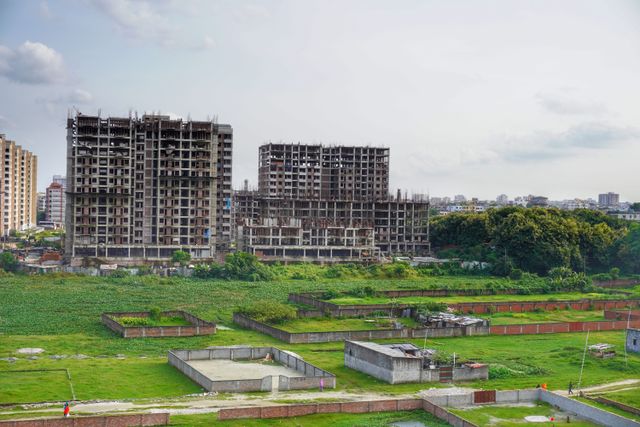
Buying land is often considered a long-term decision. Unlike a ready property, land gives investors the flexibility to hold, develop, or use the asset according to their future plans. But not every plot offers the same potential.
For anyone considering land investment in Kolkata, understanding what can influence future demand and property value is essential. Location matters, but it is only one part of the equation. Infrastructure, connectivity, surrounding development, permitted land use, and the area’s long-term growth prospects can all influence how a property performs.
A careful evaluation before purchase can help investors make decisions based on fundamentals rather than short-term speculation.
A common mistake when evaluating land is focusing only on what exists around the property today.
A developing area may look less attractive than an established neighbourhood, but future infrastructure and commercial activity can change its prospects significantly.
At the same time, an already developed location may command a higher price, leaving less room for future appreciation.
Investors should therefore examine both the current condition of the area and its potential direction over the coming years.
Connectivity is one of the strongest factors influencing real estate demand.
Land that offers convenient access to major roads, highways, public transportation, railway networks, or important commercial centres can become more attractive as surrounding development increases.
For commercial and industrial land, connectivity becomes even more important because businesses depend on efficient movement of people and goods.
Before purchasing, consider how easily the property can connect with the wider city and regional markets.
Infrastructure development can influence how an area evolves.
New roads, improved transport links, commercial developments, educational institutions, healthcare facilities, and other infrastructure can increase the attractiveness of a location.
However, investors should distinguish between confirmed infrastructure projects and informal expectations.
Where possible, research official plans and current development activity instead of relying solely on rumours about future projects.
This approach creates a more realistic assessment of potential growth.
The properties surrounding a plot can provide useful clues about future demand.
Look for signs of:
When multiple types of development begin appearing in an area, it can indicate increasing economic activity.
For land investors, understanding the broader development pattern can be more useful than looking at one property in isolation.
The future potential of a plot depends heavily on what it can legally be used for.
Before purchasing land, investors should understand its applicable land-use classification and development restrictions.
A property intended for residential use may have very different investment characteristics from commercial or industrial land.
Buyers should also understand applicable construction rules, access requirements, approvals, and other development conditions.
Proper due diligence helps ensure that the investor’s plans are compatible with the property’s permitted use.
The surrounding area may be developing, but the plot itself also needs to be practical.
Check whether the property has access to essential infrastructure such as:
For larger developments, internal infrastructure can significantly affect the cost and timeline of construction.
A plot with better infrastructure may therefore offer practical advantages even when two properties appear similar in size and location.
Understanding potential future buyers or users can provide another perspective.
For example, industrial land may attract manufacturers, logistics companies, warehouses, or other businesses.
Commercial land may appeal to retailers, offices, service providers, or developers.
Residential land may attract individual homebuyers or residential developers.
The broader the pool of potential users, the more flexibility an investor may have in the future.
Price should always be evaluated in context.
A low-priced plot is not necessarily a good investment if it has poor connectivity, limited infrastructure, or restricted development potential.
Similarly, a higher-priced property may offer stronger long-term prospects if it has excellent connectivity, established infrastructure, and a desirable location.
Instead of asking whether land is cheap or expensive, investors should ask whether the price is reasonable relative to the property’s characteristics and potential.
Land investment generally works best when approached with a suitable time horizon.
Investors expecting immediate returns may find that land does not match their objectives. Property values can take time to respond to infrastructure improvements and broader market development.
Before purchasing, establish whether the investment is intended for:
Having a clear objective makes it easier to evaluate whether a particular property is suitable.
The quality and reliability of the developer can make a significant difference when purchasing plotted or developed land.
An experienced developer can provide information about project planning, infrastructure, documentation, permitted usage, and development timelines.
Jalan Builders brings experience in industrial, commercial, and real estate development, helping businesses and investors identify properties suited to different long-term requirements.
For buyers considering land investment in Kolkata, choosing a professionally planned development can provide greater clarity around the property and its surrounding infrastructure.
Kolkata continues to play a significant role in Eastern India’s economic and commercial landscape.
Its established transport infrastructure, connection to regional markets, and expanding industrial and logistics activity create opportunities across different segments of real estate.
For investors, this means the focus should not simply be on finding land in Kolkata, but on identifying land in locations with strong fundamentals and realistic development potential.
Evaluating land before purchase requires looking beyond today’s property prices. Connectivity, infrastructure, surrounding development, permitted use, potential demand, and investment timelines all contribute to the property’s long-term prospects.
For those considering land investment in Kolkata, a well-researched decision can help reduce unnecessary risks and create opportunities for future value.
The key is to assess the complete picture: not just what the land is worth today, but what makes the location and property useful tomorrow.