Address
304 North Cardinal St.
Dorchester Center, MA 02124
Work Hours
Monday to Friday: 7AM - 7PM
Weekend: 10AM - 5PM
Address
304 North Cardinal St.
Dorchester Center, MA 02124
Work Hours
Monday to Friday: 7AM - 7PM
Weekend: 10AM - 5PM

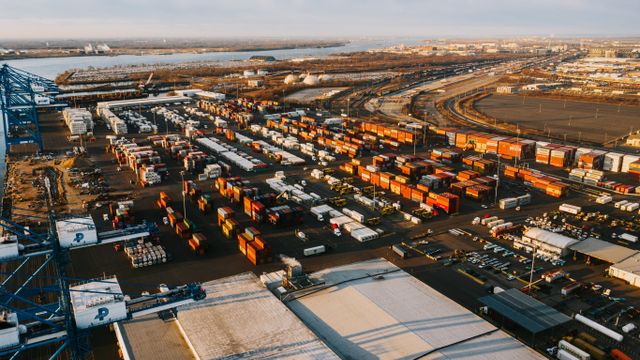
For many businesses, a warehouse is considered a place where products are stored until they are needed. But in modern supply chains, its role is much bigger. A warehouse influences inventory management, order fulfilment, transportation planning and the overall efficiency of business operations.
A poorly selected warehouse can increase transportation expenses, create delays and make inventory management difficult. On the other hand, a suitable facility can help businesses organise their supply chains and respond more efficiently to customer demand.
As companies evaluate distribution and storage requirements, choosing the right warehouse in Kolkata becomes an important business decision.
The location of a warehouse affects how quickly products can move between suppliers, storage facilities and customers.
For a distribution business, transportation efficiency can influence delivery timelines and operating costs. For a manufacturer, the warehouse may need to be positioned conveniently in relation to production facilities and incoming raw materials.
Businesses should therefore evaluate a warehouse based on its relationship with their wider supply chain.
A location that is convenient for one company may not work equally well for another. A business distributing products across several markets will have different priorities from a company storing raw materials for a nearby manufacturing unit.
Before choosing a property, organisations should identify their primary delivery destinations, supplier locations and transportation requirements.
The size of a warehouse is an important consideration, but floor area alone does not determine its usefulness.
Businesses should examine how effectively the available space can be organised. Storage height, column placement, internal movement areas, loading arrangements and accessibility can all influence operational capacity.
A warehouse with a large floor area may still be inefficient if its layout makes it difficult to move goods.
Companies should consider the type of products they handle. Fragile items, packaged consumer goods, industrial components and temperature-sensitive materials may require different storage arrangements.
The property’s physical characteristics should match the intended use.
A warehouse must support the movement of goods in and out of the facility.
Businesses handling bulk shipments should examine whether the property can accommodate the vehicles used in their operations. Road width, turning space, loading arrangements and entry conditions are all relevant.
A location may appear close to a major road but still create operational difficulties if large vehicles cannot access the premises conveniently.
Companies should also examine traffic conditions and restrictions that could affect delivery schedules.
When evaluating a warehouse in Kolkata, practical access should be treated as seriously as the property’s size and price.
Warehouse planning is closely connected to inventory management.
Businesses need to know where products are stored, how quickly they can be retrieved and how stock movement is recorded. An inefficient layout can increase handling time and create unnecessary movement within the facility.
A well-organised warehouse should support clear storage zones, efficient picking routes and a logical movement of goods.
For example, frequently dispatched products may need to be positioned for easier access, while slower-moving inventory can be stored in other designated areas.
These decisions can improve the use of available space and reduce avoidable operational delays.
The cost of a warehouse involves more than its rent or purchase price.
Businesses should consider transportation expenses, electricity, security, maintenance, staffing, insurance and any modifications required before operations begin.
A property with a lower initial cost may become expensive if it requires extensive alterations or creates additional logistics expenses.
Companies should compare properties using their estimated total operating cost rather than relying on one headline figure.
This approach provides a more realistic picture of whether a warehouse is financially suitable.
The terms warehouse and godown are often used interchangeably, but the actual requirements of a business may differ depending on the nature of its storage operations.
A business requiring organised inventory systems, frequent dispatches and structured distribution processes may have different requirements from one that primarily needs space for bulk storage.
When exploring a godown in Kolkata, businesses should consider the nature of their goods, the expected storage period, handling requirements and accessibility.
The right property should match the company’s operating model.
Property verification is an essential part of warehouse selection.
Businesses should review ownership documents, permitted land use, applicable approvals, access rights and any restrictions that may affect the intended activity.
They should also examine the physical condition of the building, drainage, electrical arrangements, water availability and structural suitability.
If modifications or construction are required, the organisation should understand the relevant permissions and estimated costs before proceeding.
Independent legal and technical advice can help identify potential issues before the property is finalised.
Business requirements can change as a company grows.
An organisation that currently handles a limited volume of products may need additional storage capacity as its customer base expands. Seasonal demand may also create temporary pressure on warehouse space.
Businesses should consider whether the selected property can accommodate future changes.
This does not necessarily mean purchasing the largest available facility. Instead, the objective should be to select a property that offers the right balance between current requirements, financial considerations and future flexibility.
A warehouse should be evaluated as part of the complete supply chain, not as an isolated property purchase.
Location, storage design, vehicle access, operating expenses and legal documentation all contribute to its long-term usefulness.
For companies exploring commercial property options, Jalan Builders recognises the importance of aligning property decisions with actual business requirements.
The right warehouse is not simply a space to keep goods. It is a working part of the business that can influence efficiency, distribution and customer service.